
What happens when you overeat on Ozempic? If you have asked yourself this, you are likely trying to make sense of something that feels confusing.
You may have started Ozempic expecting food to feel easier. Maybe you thought it would stop hunger, reduce cravings, silence the food noise, or make overeating go away. So when you still find yourself eating past the point of fullness, it can feel frustrating. You might even wonder why this is still happening.
Let’s take a closer look at what is going on in your body and your mind.
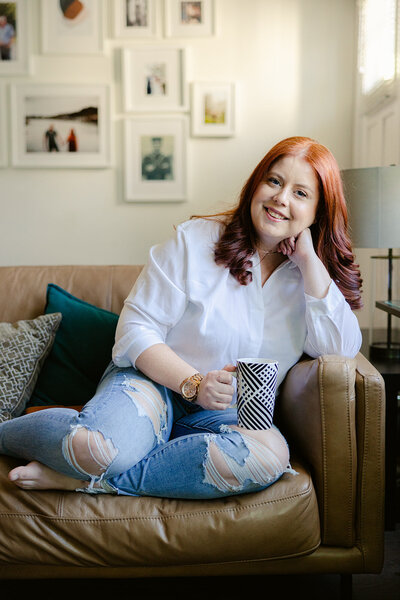
I’m really glad you found your way here. I’m Dr. Meredith MacKenzie, a binge eating therapist and intuitive eating coach. If eating feels confusing right now, like you don’t trust your hunger or you’re stuck in rules you can’t seem to break, you’re not alone in that. Inside my group program, One Body To Love, I help you reconnect with your body and find a way of eating that feels calmer, more flexible, and easier to stick with.

Wait… Why Am I Still Overeating on Ozempic?
Many people expect Ozempic to take away the urge to overeat. In some ways, it can help. It can lower appetite and help you feel full sooner. But it does not change everything.
If your eating is tied to stress, habits, or emotions, those patterns do not just disappear. Even if your body feels less hungry, your mind may still reach for food for other reasons.
So if you are still overeating, it does not mean the medication is not working. It means there is more to eating than hunger alone.
Read How to Eat Intuitively (Even If You Feel Totally Disconnected From Hunger Cues) to learn how to gently reconnect with your body and feel more steady around food.
What GLP-1 Medications Actually Do (and Don’t Do)
GLP-1 medications like Ozempic work in your body, not your daily life. They can reduce appetite, help you feel full sooner, slow digestion, and support blood sugar levels.
At the same time, they do not address emotional eating, long-standing habits, or food guilt. They also do not teach you how to trust your body.
This is where many people start to feel stuck. It is common to expect the medication to fix both the physical and emotional parts of eating, but it only works on one side of the experience.
If you keep breaking food promises to yourself, this will help you understand why. Read Why You Keep Breaking Food Promises to Yourself (And Why That’s Not a Failure).
What Happens in Your Body When You Overeat on Ozempic
So what happens when you overeat on Ozempic, physically? Because digestion is slower, food stays in your stomach longer. This means overeating can feel more intense than it used to.
You might notice a strong sense of fullness, bloating, nausea, or stomach pain. Some people also feel acid reflux or low energy after eating. Your body is trying to process more food than it is comfortable holding at once.
This can feel uncomfortable or even scary. But your body is not failing. It is reacting to a mix of slower digestion and eating past fullness.
Read GLP-1s and Intuitive Eating: Finding Food Freedom When Medication Enters the Picture to explore how to work with your body, not against it, while on medication.
What Happens Emotionally After Overeating on GLP-1s
The physical feelings are only one part of the experience. There is often an emotional layer that shows up right after. It can come on quickly, sometimes before you even have time to process what just happened. One moment you are eating, and the next you are sitting with a mix of thoughts and feelings that feel hard to sort through.
After overeating, many people notice a wave of emotions. You might feel:
- Shame
- Guilt
- Frustration
- Confusion
You may also have the thought, “This should not be happening anymore.” You might question yourself or wonder why this is still happening, especially if you expected things to feel different.
That thought can make the moment feel heavier. It can turn one eating experience into a much bigger story about failure. But this reaction makes sense. You were hoping for relief. You may have believed this would finally feel easier. So when overeating still happens, it can feel discouraging and hard to understand.
If your appetite has been increasing on GLP-1s and it feels confusing, this will help you make sense of it. Read Increased Appetite After GLP-1s: Why It Happens and Why It’s Not About Willpower for a more supportive way to understand what’s going on.
Why Medication Doesn’t Stop Emotional or Habit-Driven Eating
Here is an important piece to understand. Overeating is not always about hunger.
Stress after a long day can play a role. At times, it is about wanting comfort or a break. For some, it becomes a habit, like eating at night. It can also be linked to feeling tired, bored, or overwhelmed.
Ozempic does not remove these needs. If food has been a way to cope or soothe, your brain will still reach for it. Even if your stomach feels full faster. This is why many people still overeat on GLP-1 medications. The body signal changes, but the pattern remains.
The Risk of the Binge–Restrict Cycle on GLP-1s
When people think about what happens when you overeat on Ozempic, they often focus on that one moment. But what happens next matters just as much.
After overeating, a pattern can start to form:
- You feel the urge to eat less the next day
- You try to be more careful or in control
- This leads to restriction
- Restriction builds stronger urges to eat
- Those urges can bring you back to overeating
This is the binge-and-restrict cycle. GLP-1 medications can make this harder to notice. Hunger may feel quieter, but the cycle can still be there under the surface.
If you want a simple tool to help in those moments, this is a great place to start.
What Actually Helps If You’re Overeating on Ozempic
If you are still overeating, the answer is not to try harder or eat less. What helps is building a sense of safety and trust with food.
Start by eating regularly. Even if you feel less hungry, your body still needs fuel. Skipping meals can increase the chance of overeating later. Next, try to stay present while eating. Slow down and check in with your body. Notice when you start to feel full.
It also helps to be curious rather than critical. Ask yourself what you were feeling and what you needed in that moment. You can also build other ways to support your emotions. Food can be one tool, but it does not have to be the only one.
Finally, let go of the idea of perfect eating. Trying to control every bite often leads to more stress and more overeating.
If your hunger and fullness cues feel hard to trust, this will help you reconnect with your body. Read How to Actually Listen to Your Hunger and Fullness Cues (When You’ve Been Ignoring Them for Years).
What Happens When You Overeat on Ozempic and What You Can Do Next
Understanding what happens when you overeat on Ozempic is not about trying to get it right every time. It is about learning how to respond to your body with more awareness and care. Some days will feel easier, and other days may feel frustrating or unclear. That is part of the process.
As you begin to notice what is happening in your body and your patterns, things can start to feel steadier. Food may feel less stressful. Your reactions may feel less intense. Over time, you can build a more supportive, calmer relationship with eating. There is no need to rush this or force change.
If you have been trying to understand what happens when you overeat on Ozempic but still feel confused by your eating patterns, it makes sense. This is exactly the kind of work we focus on inside One Body To Love.
If eating still feels chaotic, all-or-nothing, or hard to trust, support can help you find your footing again. In one-on-one coaching, we gently explore what is driving your eating and take the pressure off trying to be perfect.
If you want a simple place to begin, you can download my Mindful Eating Log. It is a gentle way to slow down, check in with your body, and start building awareness in your day-to-day life.
And if you are looking for ongoing support, you can connect with me on Instagram, listen to my podcast One Body To Love, explore my YouTube channel, or book a free call to find the kind of support that feels right for you right now.