
Nighttime eating can feel confusing and frustrating. After a full day of trying to stay on track, you may wonder why it keeps happening.
Dinner ends, the kitchen gets cleaned up, and you promise yourself tonight will be different. Then the house grows quiet. You sit down, pick up your phone, and soon you are scrolling and snacking at the same time. Part of you feels soothed. Another part feels upset and confused about why this keeps repeating.
Let’s slow it down and look at what is really going on.
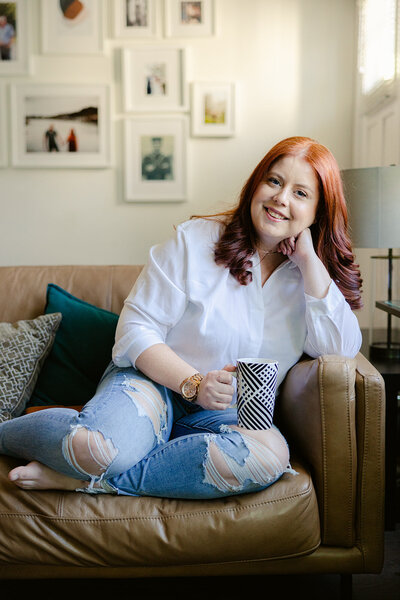
Before we dive in, welcome. I’m Dr. Meredith MacKenzie, a binge eating therapist and intuitive eating coach. If nighttime eating feels frustrating or confusing, you are in the right place. These patterns make sense when we look at what your body and nervous system are trying to manage.
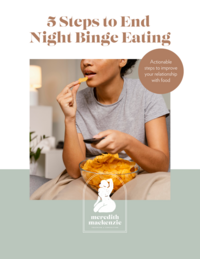
If you would like a gentle place to start, my free guide, 5 Steps to End Night Binge Eating, can help you understand what is driving the pattern and how to respond with steadiness instead of shame. You can connect with me on Instagram for more support and resources.

Nighttime Eating Is Not About Willpower. It Is About Regulation.
Many women think nighttime eating means they lack control or need more discipline. That is not what is happening.
By the end of the day, your body and brain are worn out. Work, caregiving, and solving everyone else’s problems take energy. In the middle of meeting those needs, your own often get pushed aside.
A tired nervous system looks for relief. Food offers quick comfort. Scrolling offers a quick escape. Both help you shift out of stress for a short time. This is about regulation, not willpower.
After a full day of holding it together and making careful choices, nighttime eating can become the moment your body asks for something back. It is not a character flaw. It is a coping pattern.
Read Craving Rest, Reaching for Food to explore the real root of emotional eating and how to respond with care.
Why the Scroll and Snack Combo Feels So Comforting
There is a reason the scroll and snack habit feels hard to stop.
First, scrolling gives your brain a break. It pulls your focus away from stress. It gives you small hits of interest and novelty. That feels good when your day feels heavy or dull. Second, eating gives your body comfort. Food raises feel-good chemicals in the brain. Food can soften hard feelings, fill an empty space, and create a sense of company at the end of the day.
When you mix the two, the effect is stronger. You are getting mental escape and physical comfort at the same time. Your brain learns this pattern fast. It starts to expect it.
If you have dieted in the past, nighttime eating can feel even more intense. If you restrict during the day, your body may be truly hungry at night. Even if you ate dinner, your body may still be catching up.
Restriction does not have to mean skipping meals. Restriction does not always look extreme. Sometimes it shows up as eating lightly throughout the day. Other times, it means ignoring early hunger cues or choosing foods that leave you unsatisfied. When your body senses a gap, it will ask for more. Often it asks at night, when you finally slow down.
Breaking food promises does not mean you failed. Read this post to understand what is really driving the pattern and how to shift it with compassion.
Are You Actually Hungry or Just Exhausted, Bored, or Touched Out
Sometimes nighttime eating is about true hunger. If you did not eat enough earlier, your body will signal that it needs food. That is normal, and it makes sense to respond to that hunger.
Other times, the hunger feels more emotional. For example:
- Boredom: The day is done, but you still feel restless. Food gives you something to do and fills the quiet.
- Loneliness: Even if you live with others, nighttime can feel heavy. Food can start to feel like company.
- Feeling touched out: If you have kids or care for others, you may have been needed all day. At night, you want something that is just for you. Food can feel like the one thing no one else asks for.
- Exhaustion: When you are this tired, it is hard to think clearly. Your brain looks for easy comfort. Nighttime eating becomes the simplest option.
The goal is not to judge the reason. The goal is to get curious. You might gently ask yourself:
- What was today like for me?
- Did I eat enough?
- Did I rest at all?
- Did I have any time that felt like my own?
Nighttime eating often makes more sense when you step back and look at the whole day.
If you spend the day holding it all together and then feel out of control with food at night, this video will speak to you.
What to Do Instead If You Want to Shift the Pattern
You do not have to force this to change. If nighttime eating feels distressing, there are gentle ways to shift it. Think of this as experimenting, not fixing.
- Check your daytime eating.
Start by looking at your meals earlier in the day. Are they regular and filling? Do breakfast and lunch truly hold you? Include carbs, protein, and fat to keep your energy steady. When your body feels nourished, nighttime eating often eases. - Build in small moments of care.
A few quiet minutes in your car can help. A short walk after lunch might take the edge off. Saying no to one extra task can protect your energy. Small acts of care during the day reduce the pressure that builds at night. - Identify what the scroll-and-snack habit provides.
Consider whether it offers escape, comfort, quiet, or a sense of reward. Naming the need gives you more choice. - Match the need with support.
Comfort might look like a warm shower or wrapping up in a blanket. Escape could mean watching one show on purpose instead of endless scrolling. If you’re hungry, plan a satisfying evening snack, put it on a plate, and sit down to enjoy it. - Use the pause.
Right before you reach for food, there is often a brief moment of awareness. In that space, gently check in with yourself. Notice what you feel. No need to stop or judge. With practice, that pause becomes more familiar and steady.
This approach is not about forcing people to cut out nighttime eating. It is about meeting the real need with care and building steadiness over time.
Read How to Stop Stress Eating: 5 Gentle Ways to Cope Without Turning to Food for simple, supportive shifts that actually help.
You Are Doing Your Best to Cope
Nighttime eating often brings up shame. It can start to feel like this habit means something about your character. There may be fear about weight gain. There may be frustration about not sticking to your plans.
When we slow down and look closer, a different story comes into view. Beneath the behavior is usually a tired nervous system and a woman who has given her energy away all day. Food becomes a way to soften the edges of stress, quiet, or loneliness. Given that context, the pattern makes sense.
Shame does not ease nighttime eating. It tends to make it stronger. Self-judgment raises stress, and higher stress increases the urge to soothe with something quick and easy. The cycle then feeds itself.
A gentler response can shift this. Wanting comfort at the end of a long day makes sense. Feeling worn out after carrying so much is human. Many nervous systems reach for something simple when they are stretched thin.
Speaking to yourself this way lowers stress and creates room for change. Nighttime eating is rarely about laziness. More often, it reflects how much you have been holding on without enough support.
If you keep trying to fix nighttime eating with more discipline, this video offers a different path.
Want Help Untangling Your Nighttime Eating Pattern?
Nighttime eating usually has a reason. Often, it reflects hunger, stress, or the need for comfort after a long day. Instead of adding more rules, try adding more curiosity. When you support your body and nervous system with steady meals, small moments of care, and compassionate self-talk, evenings can begin to feel calmer. Change grows best from understanding, not pressure.
If nighttime eating has become your default way to unwind, there is nothing wrong with wanting support. Food Freedom in a Weekend is a self-paced course that walks you through simple, practical tools to help you feel steadier at night, less pulled into the scroll-and-snack cycle, and more at ease with food overall.
If you would like more personalized guidance, one-on-one coaching gives you space to explore what your evenings are really about and build skills for regulation, nourishment, and self-trust. You can also tune into my podcast or YouTube channel for grounded tools, or book a free call so we can talk through what kind of support would feel most helpful right now.