If you’ve spent years hearing that health starts with weight loss, you might wonder: What is Health at Every Size? Health at Every Size, often called HAES, is an approach to health that moves the focus away from weight and toward care, well-being, access, and respect.
For many people, this idea can feel very different from what they’ve been taught. Maybe you’ve heard that a smaller body is always healthier. Maybe you’ve been told to lose weight at doctor visits, even when you went in for something that had nothing to do with your size. Or maybe you’ve spent years trying to change your body because you believed that was what you had to do to take care of yourself.
HAES offers another way to think about health.
It asks us to look beyond the number on the scale and consider the whole person. That includes physical health, but it also includes mental health, access to care, stress, sleep, food, movement, relationships, and the impact of weight stigma.
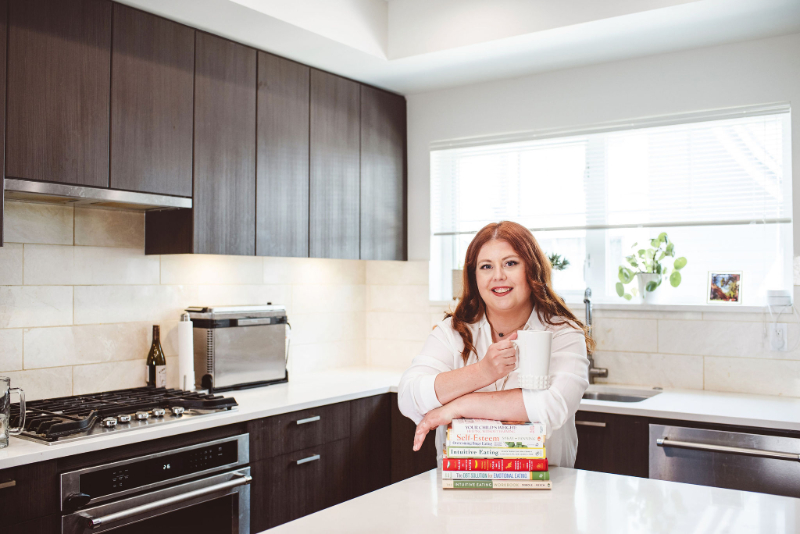
Hi! I’m Dr. Meredith MacKenzie, a binge eating therapist, intuitive eating coach, and founder of the One Body To Love program. If you’re trying to heal your relationship with food while also caring about your health, you don’t have to choose one or the other. For more support with food freedom, body image, and life beyond dieting, come join me on Instagram.
What Is Health at Every Size?
So, what is Health at Every Size in simple terms?
Health at Every Size is a weight-inclusive approach to health and well-being. Instead of treating weight loss as the main goal, HAES focuses on helping people care for themselves in ways that support their health and quality of life.
That might include getting enough food, finding movement that works for your body, managing stress, getting good medical care, sleeping, connecting with other people, and caring for your mental health.
It also means recognizing that health is complex.
Your health isn’t based on one number. Your genes, income, stress levels, access to health care, environment, relationships, and many other parts of your life can affect your health.
HAES also asks health care providers to treat people with dignity, regardless of body size. Your symptoms deserve to be taken seriously without every health concern being blamed on your weight.
Want to feel more confident speaking up about your health? Read How to Advocate for Yourself at the Doctor for practical ways to ask for the respectful, weight-inclusive care you deserve.
The Principles of HAES
The ideas behind HAES have grown over time. At the heart of the approach is a simple belief: people of all body sizes deserve respectful and fair health care.
Some of the key ideas behind HAES include:
- Looking beyond weight: HAES doesn’t use weight as the main measure of health. Instead, it focuses on care that supports the whole person and their needs.
- Addressing weight stigma: People can be judged, treated poorly, or receive different health care because of their body size. HAES recognizes the harm this can cause and supports respectful care for people of all body sizes.
- Respecting body choice: You get to make choices about your own body. A health care provider can offer information and support, but your body isn’t a problem for someone else to solve.
- Seeing the bigger picture: Many things can affect health, including food access, money, safe housing, stress, discrimination, and access to medical care. Health doesn’t happen in a bubble.
This is one reason weight-inclusive care can feel so different from traditional diet advice. Instead of asking, “How do we make this body smaller?” it asks, “What support does this person need?”
Want to learn more? Watch What Are the Health at Every Size Principles? for a simple breakdown of HAES.
Common Misconceptions About HAES
When people first ask, “What is Health at Every Size?” they sometimes assume it means that everyone is healthy at every size.
That’s not what HAES means.
People can have health problems at any body size. HAES doesn’t deny illness or suggest that health doesn’t matter. Instead, it questions whether making weight loss the main goal is always the best way to support health.
Another common belief is that HAES tells people to ignore nutrition or movement. Again, it doesn’t.
Caring about nutrition doesn’t have to mean dieting. Movement can be about feeling good rather than trying to burn off food. Working with a doctor, managing a health condition, getting better sleep, and making supportive changes can all be part of caring for your health without making a smaller body the goal.
HAES also doesn’t require you to love your body every day.
You may still wish your body looked different or feel afraid of weight gain. Letting go of dieting can also bring up mixed feelings, especially after years of being told that changing your body is the answer.
You’re allowed to feel torn. Weight-inclusive care doesn’t require perfect body acceptance before you can begin caring for yourself.
Still have questions about HAES? Watch Common Health at Every Size Misconceptions to clear up some of the biggest myths.
What the Research Says
Research shows that body weight alone doesn’t tell the whole story about a person’s health. Many factors play a role, and studies of weight-neutral and HAES-based approaches have found benefits for eating habits, body image, self-esteem, and some areas of physical health.
Rather than promising better health or focusing on weight loss, HAES looks at behaviours that support overall well-being. This includes mental health and your relationship with food.
For someone who has spent years dieting, this shift can matter. Health advice that increases food fear, body shame, or the binge-restrict cycle can affect your well-being too.
Want to learn more about the messages that can make trusting your body so difficult? Read How to Spot Sneaky Diet Culture (Even in “Wellness” Spaces) next.
How HAES Supports Recovery from Disordered Eating
For someone healing from binge eating or disordered eating, weight-focused advice can make recovery harder. You may be trying to stop restricting while still hearing that you should eat less or lose weight.
Restriction can increase hunger, food thoughts, and the urge to binge. Understanding the binge-restrict cycle can help explain why another diet may keep you stuck.
Instead, a HAES approach can support recovery by helping you:
- Eat more regularly: Consistent meals and snacks can help your body trust that food is available and reduce extreme hunger.
- Reconnect with hunger and fullness: Rather than following diet rules, you can slowly learn to notice and respond to your body’s signals.
- Make peace with food: Foods that once felt forbidden can become less powerful when you give yourself permission to eat them.
- Explore emotional eating without shame: Instead of judging yourself for turning to food, you can get curious about what you were feeling and what you needed in that moment.
- Care for your health without focusing on weight loss: You can make choices that support your physical and mental health without using restriction or punishment as your plan.
HAES creates space to work on your relationship with food while respecting both your body and your health. Recovery becomes less about control and more about learning what helps you feel fed, supported, and cared for.
If food still feels divided into “good” and “bad” choices, read Making Peace With Forbidden Foods next.
How to Apply HAES in Everyday Life
Understanding what Health at Every Size is can be helpful, but what does it look like in daily life?
Start by noticing when weight loss is treated as the answer to a health concern. If a doctor recommends losing weight, you can ask what care they would suggest for someone with the same symptoms in a smaller body.
You can also notice how health advice makes you feel. Does it support you, or leave you feeling guilty, scared, or focused on controlling food?
With eating, focus on adding care instead of taking food away. Regular meals, satisfying foods, and enough nourishment can help you build more trust with food.
Movement can shift too. Instead of choosing exercise based on calories burned, consider what feels good, meets your needs, and fits your life.
Finally, question messages that link body size with someone’s habits or health. Body size doesn’t tell us the full story about a person.
HAES isn’t another set of rules to follow. It’s a way to approach health with more care, curiosity, and respect.
If you’re working on trusting your body’s signals again, learn more about listening to hunger and fullness cues.
What Is Health at Every Size? A Different Way to Care for Your Health
Learning what Health at Every Size is can open the door to a different kind of health care. Instead of measuring your progress by your weight, you can focus on what helps you feel nourished, supported, and well. You can care about your health while also stepping away from food rules, body shame, and the pressure to make your body smaller.
If you’re ready to explore food freedom and weight-inclusive care with support, my intimate group education and coaching program, One Body To Love, can help you move away from restriction and build more trust with food and your body. If you’d prefer more personal support, you can also explore my 1:1 coaching. Not sure which option fits? Book a free discovery call, and we can talk about what kind of support may feel right for you.
For more conversations about weight-inclusive health, binge eating recovery, intuitive eating, and body image, subscribe to my YouTube channel and tune in to my podcast for practical tools and support as you build a more peaceful relationship with food and your body.