
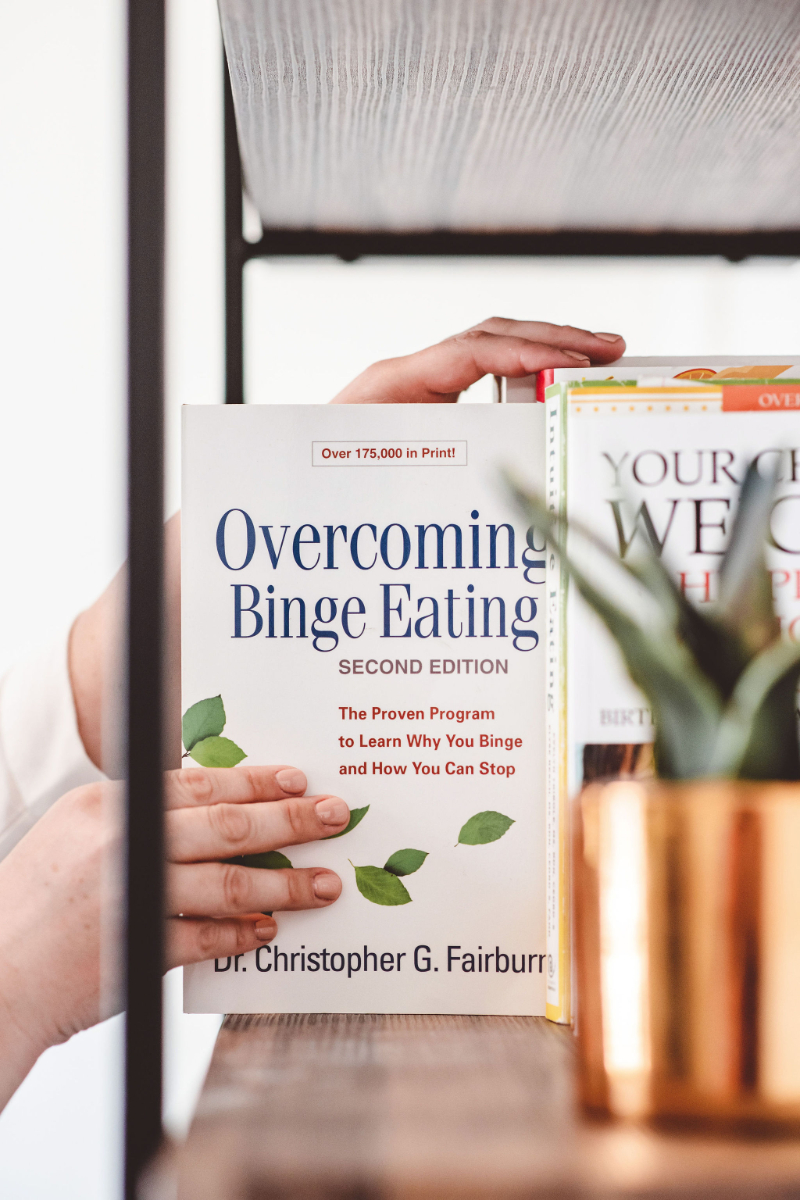
If food feels like a fight you have to win every day, working with a binge eating therapist can help you understand why. Instead of giving you another food plan to follow, therapy can help you look at what’s driving your eating and build a calmer relationship with food.
Maybe you binge at night after holding it together all day. Maybe you promise yourself you’ll “do better” tomorrow, only to end up back in the same cycle. Or perhaps food takes up far more space in your mind than you want it to.
It can be hard to know what kind of help you need, especially if you’ve already tried diets, meal plans, apps, and other ways to control your eating.
The good news is that binge eating treatment doesn’t have to focus on more control. It can help you understand your patterns, meet your needs, and slowly rebuild trust with food.
Hi! I’m Dr. Meredith MacKenzie, a binge eating therapist, intuitive eating coach, and founder of the One Body To Love program. If you’re tired of fighting with food and wondering why nothing seems to stick, there may be more happening beneath your eating than you realize. For more support with binge eating recovery and food freedom, come join me on Instagram.
How Can a Binge Eating Therapist Help You?
A binge eating therapist helps you understand what’s happening before, during, and after a binge.
That may include looking at your eating patterns. However, it also means exploring your emotions, stress, beliefs about food, body image, and past dieting.
For example, you might notice that you binge most often at night. It’s easy to assume the problem is that you need more control in the evening. Yet, therapy may help you notice that you’re not eating enough during the day.
Or maybe you spend all day caring for other people. By nighttime, food is one of the only ways you know how to comfort yourself.
A therapist can help you get curious about these patterns without adding more shame.
Over time, you can begin to understand what your eating may be trying to do for you. From there, you can build new ways to care for yourself while creating a safer, steadier relationship with food.
Want to understand why the binge eating cycle can feel so hard to break? Watch this video to learn what keeps the cycle going and how you can begin stepping out of it.
Signs You Might Benefit From Therapy
You don’t have to wait until your eating feels “bad enough” to ask for help.
Binge eating can look different from person to person. You may binge often, or it may happen only during stressful times. You might also feel out of control around food without knowing if what you experience “counts” as binge eating.
Some signs that extra support may help include:
- You often feel out of control while eating.
- You eat large amounts of food quickly.
- You hide food or eat in secret.
- You feel guilt or shame after eating.
- You skip meals or restrict food after a binge.
- You think about food, weight, or your body for much of the day.
- You keep starting new diets to try to stop binge eating.
- You use food to cope with stress, sadness, anger, boredom, or exhaustion.
- You feel scared around certain foods because you worry you won’t be able to stop.
You don’t need to check every box. If your relationship with food causes stress or takes up a lot of your energy, that matters.
Wondering whether your eating patterns may be part of a binge-restrict cycle? Read this blog next.
What to Expect From a Binge Eating Therapist
If you’ve spent years being told what to eat, you might worry that a binge eating therapist will give you another set of rules. However, good binge eating treatment should feel very different from dieting.
Instead of judging what you ate, therapy can help you understand what’s driving your eating. You may explore:
- Eating patterns: Are you eating enough throughout the day?
- Hunger and fullness: Can you notice and respond to your body’s cues?
- Stress and emotions: Does food help you cope with difficult feelings?
- Food rules: Are certain foods off-limits, or do you find it hard to trust yourself around them?
- Body image: Does fear of weight gain pull you back toward restriction?
These questions aren’t about what you did “wrong.” They help you understand your needs and patterns with more curiosity.
From there, you can work on eating more regularly, challenging food rules, coping with emotions, and building trust with food. There isn’t one perfect path through recovery, so the support can change as your needs change.
Want to learn more about rebuilding trust with food? Read my guide to healing your relationship with food.
Common Myths About Binge Eating Treatment
There are many ideas about binge eating that can make asking for help feel scary.
One common myth is that treatment will put you on a strict food plan. While some people may benefit from more structure around eating, structure doesn’t have to mean restriction.
Another myth is that you’ll have to give up your favourite foods. In fact, making foods forbidden can sometimes make them feel even more powerful. Part of healing may involve learning that you can eat foods you enjoy without needing to earn them first.
You may also worry that you need to love your body before you can recover. That’s not a requirement. You don’t have to be body positive enough to work with me. You can have hard feelings about your body while still healing your relationship with food.
Finally, therapy isn’t about finding the perfect way to eat. The goal is to help food take up less space in your life so you have more room for everything else that matters to you.
Why a Binge Eating Therapist Looks Beyond Willpower
When binge eating keeps happening, it’s easy to think you need more self-control. Yet, binge eating is rarely that simple.
Many things can make the urge to binge stronger, including:
- Restriction: Not eating enough can keep you focused on food and make you more likely to binge later.
- Stress: Food can become a quick way to find comfort after a hard day.
- Strong emotions: Sadness, anger, loneliness, or overwhelm can make eating feel soothing.
- ADHD: It may be harder to notice hunger, pause before eating, or manage strong urges.
- Exhaustion: When you’re drained, food may feel like one of the easiest ways to meet a need.
It’s not about willpower. It’s about survival patterns.
A binge-eating therapist can help you understand those patterns instead of fighting them. You can start asking what your eating is trying to tell you and find new ways to meet those needs.
That shift from judgment to curiosity can be an important part of recovery.
If you’ve been blaming yourself for not having enough control around food, read more about why diets don’t work.
Choosing the Right Therapist
Finding the right support matters.
Start by looking for someone who understands binge eating, disordered eating, and the binge-restrict cycle. A therapist who works from an intuitive eating or weight-neutral approach may also be helpful if dieting and body image are part of your struggle.
You can ask how they approach binge eating. Do they focus on weight loss? Do they use strict food rules? How do they talk about body image? What role does intuitive eating play in their work?
Pay attention to how you feel when they answer.
You want someone who can make room for mixed feelings. For example, you may want freedom from dieting while still wishing your body were smaller. Those feelings can exist at the same time.
You’re allowed to feel torn. Therapy should give you space to explore that without judgment.
The right therapist also won’t expect you to recover perfectly. Healing can be messy. Some weeks may feel easier than others. What matters is having support as you learn a different way forward.
Want to understand how binge eating can affect your mental and emotional well-being? Watch this video to learn more about the emotional impact and why healing goes beyond food.
Taking the First Step Toward Healing
Starting therapy can feel like a big step, especially if you’ve spent years trying to manage food on your own.
You don’t need to know why you binge or have the right words to explain it. Maybe you’re tired of thinking about food, eating in secret, or promising yourself you’ll do better tomorrow. That’s enough of a place to start.
A binge eating therapist can help you understand your patterns with less shame and more curiosity. Over time, you can learn to respond to your needs without falling back into the binge restrict cycle.
Food freedom is possible, even if nothing else has worked.
How a Binge Eating Therapist Helps You Understand the Urge to Binge
You don’t need another plan that asks you to control food harder. You may need support understanding why food has started to feel so hard in the first place.
If you’re ready to work on binge eating with more curiosity and less shame, my intimate group education and coaching program, One Body To Love, can help you step away from restriction and rebuild trust with food and your body.
If you’d prefer more personal support, you can also explore my 1:1 coaching. Not sure which kind of support feels right? Book a free discovery call, and we can talk about what may fit your needs.
For more tools and conversations about binge eating recovery, intuitive eating, and food freedom, subscribe to my YouTube channel and tune in to my podcast for practical support as you build a calmer relationship with food.