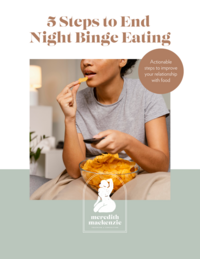
“I’m trying to practice listening to my body, but all I want is chips.”
If you’ve ever had that thought, you may have wondered whether listening to my body is actually working. Many people begin their intuitive eating journey expecting their body to ask for foods that fit traditional ideas of healthy eating. Then a craving for chips shows up, and suddenly they question everything.
It’s easy to assume that listening to your body should lead to perfect food choices. Diet culture has taught us that eating well means choosing the “right” foods all the time. So when chips sound appealing, it can feel like proof that you’re failing.
The good news is that cravings don’t mean you’ve done something wrong. In fact, they can offer valuable information about your needs, your relationship with food, and the years of food rules you’ve been carrying around. Understanding that difference can help you approach food with more trust and less fear.
Hi, I’m Dr. Meredith MacKenzie, a binge eating therapist and intuitive eating coach. If you’ve been trying to practice listening to your body but still feel confused by cravings, food guilt, or binge eating, you’re in the right place. Inside my group program, One Body To Love, we explore how to rebuild trust with food and your body without relying on diets, rules, or willpower. For more support and practical tools, connect with me on Instagram.

When Listening to Your Body Feels “Wrong”
One of the hardest parts of intuitive eating is that it often feels uncomfortable before it feels natural.
For years, many people have relied on meal plans, calorie goals, food rules, or ideas about what they should eat. Those rules can become so familiar that they start to feel like common sense. When you begin paying attention to your own hunger, fullness, and cravings instead, it can feel like you’ve lost your map.
That’s often when people start asking questions like, “Can I really trust this?” or “What if my body only wants junk food?” The concern makes sense. After spending years trying to control food, giving yourself permission to listen can feel risky.
At the same time, discomfort doesn’t mean you’re heading in the wrong direction. It may simply mean you’re learning a new skill. Trusting your body after years of ignoring it takes practice. Like any relationship, rebuilding trust doesn’t happen overnight.
Food guilt doesn’t have to be part of eating. Read How to Eat Without Feeling Guilty (Even If You’ve Struggled for Years).
Why You’re Craving Chips and Why That’s Not a Problem
When chips sound good, many people immediately assume the craving is the problem. Yet cravings are a normal part of being human.
Food is about more than nutrition. Hunger plays a role, but satisfaction matters too. Taste matters. Enjoyment matters. Convenience matters. A food can meet several needs at once.
Perhaps you’ve gone too long without eating, and your body wants quick energy. Maybe you’ve been trying to avoid chips for months, which makes them feel even more appealing. In some cases, the craving may simply come from wanting something crunchy, salty, and satisfying after a long day.
The important thing to remember is that a craving isn’t a moral issue. Wanting chips doesn’t mean you’re lacking willpower. It doesn’t mean your body is broken. It certainly doesn’t mean you’re incapable of making choices that support your well-being.
Many people are surprised to learn that cravings often become less intense when foods are no longer off limits. Once a food loses its forbidden status, it tends to lose some of its power.
Want to better understand what your cravings are trying to tell you? Watch my video, Cravings, Exhaustion & Relief: What Your Body’s Trying to Say.
Diet Culture’s Voice vs. Your Body’s Voice
One reason intuitive eating can feel confusing is that many of us have spent years hearing diet culture’s voice louder than our own. As a result, it can be hard to tell whether a thought is coming from an old food rule or from your body’s actual needs.
Diet culture’s voice often sounds like this:
- “You shouldn’t eat that.”
- “You’ve already had enough.”
- “You need to earn your food.”
- “Good foods are allowed. Bad foods should be avoided.”
- “If you’re craving chips, you’re doing something wrong.”
Your body’s voice often sounds more like this:
- “I’m hungry.”
- “I’d like something crunchy and salty.”
- “That meal was satisfying.”
- “I’m starting to feel full.”
- “I need a snack.”
- “That food sounds good right now.”
Diet culture tells you what you should do. Your body tells you what it needs. Over time, learning to distinguish between them can help you trust your body’s signals more.
Satisfaction is an important part of food freedom. Read How to Feel Satisfied After Eating (So Food Stops Taking Over Your Mind).
Listening to Your Body Isn’t About Perfection
Many people worry they’re doing intuitive eating wrong because they don’t make perfect food choices every day. Yet perfection was never the goal. There will be times when you eat past fullness because the food tastes good, miss your hunger cues because you’re distracted, or choose convenience because life is busy. None of those experiences means you’ve failed.
Listening to your body isn’t about responding perfectly every time. It’s about paying more attention than you did before and learning from your experiences rather than judging them. Think about how you’d respond to a friend who was learning something new. You probably wouldn’t expect them to get everything right immediately. The same compassion applies here. Progress often comes from curiosity, not criticism.
Cravings don’t always mean addiction. Read How to Break Sugar Addiction—And Why You’re Not Actually Addicted.
Building Trust with Your Body (Even When Chips Are Involved)
Trust is often the missing piece in conversations about food.
Many people trust meal plans more than they trust themselves. They trust food rules more than they trust hunger. Years of dieting can create the belief that the body can’t be relied upon.
Yet your body has been communicating with you all along.
When you consistently respond to hunger, your body learns that food is available. When you allow yourself to eat foods you enjoy, those foods often become less emotionally charged. As guilt starts to fade, eating can begin to feel calmer and more predictable.
This process doesn’t happen because you force yourself to stop wanting chips. Instead, trust grows through repeated experiences. You notice a craving. You respond with curiosity. You learn what feels satisfying. Then you gather information for next time.
Some days, chips may be exactly what sounds good. On other days, you might discover that chips alongside a sandwich, fruit, or another food leave you feeling more satisfied. Both experiences can teach you something.
Trust grows one meal, one snack, and one choice at a time.
What Does Nourishment Actually Mean?
Many people hear the word “nourishment” and immediately think of nutrition. While nutrition matters, nourishment is about more than what’s on your plate.
Nourishment can include:
- Getting enough food
- Feeling satisfied after eating
- Enjoying the taste of food
- Sharing meals with others
- Finding comfort and connection
- Honouring cravings and preferences
That’s why, when practicing listening to my body, it can help to focus on what you need in the moment. Sometimes that may be a balanced meal. Other times, it may include chips. A flexible approach often creates more peace than rigid food rules.
Want to better understand why cravings happen? Watch this video.
The Bigger Question Behind the Chips
For most people, the chips aren’t actually the problem. The deeper question is whether they can trust themselves around food.
Can you eat chips without turning the experience into a test of your worth? Can you notice a craving without assuming something is wrong? Can you allow food to be food rather than a measure of success or failure?
These questions often sit underneath the fear. The work of healing your relationship with food isn’t about making cravings disappear. It’s about changing how you respond to them. As fear decreases, food choices often feel less stressful and more flexible.
That doesn’t mean you’ll stop enjoying chips. It simply means they won’t carry so much emotional weight.
Wondering what your body is really asking for? Read Emotional Hunger vs Physical Hunger: How to Tell the Difference (Without Overthinking It).
When Listening to My Body Includes Chips
Sometimes listening to my body may include chips, and that doesn’t mean anything has gone wrong. The goal isn’t perfect eating. The goal is learning to trust your body, respond with curiosity, and build a more peaceful relationship with food over time.
If you’re tired of second-guessing your hunger, cravings, and food choices, support is available. Inside One Body To Love, through one-on-one coaching, we work on rebuilding trust with food and your body so that eating can feel more peaceful and less stressful over time.
You can also explore the podcast or visit my YouTube channel for practical tools and guidance. If you’d like to talk about what kind of support may be most helpful for you, you’re always welcome to book a free call.