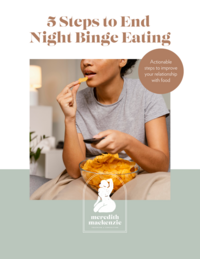

Stress eating is something many people deal with, even if they don’t always notice it. Stress eating can feel confusing because it often happens without much thought. One minute you’re feeling overwhelmed, and the next you’re standing in the kitchen looking for something to eat.
If this sounds familiar, it doesn’t mean you’ve failed or that you don’t have enough willpower. Stress eating is often your body’s way of trying to cope with hard feelings and difficult situations. Food can bring comfort, distraction, or even a short break from stress.
The good news is that stress eating isn’t something you have to fight with guilt or shame. When you understand why it happens, you can begin to respond with more kindness and care.
Hi, I’m Dr. Meredith MacKenzie, a binge eating therapist and intuitive eating coach. If stress eating has become your go-to way of coping with hard days, you’re not failing. Your eating habits make sense in the context of what you’ve been through. You don’t need more willpower or stricter food rules. Instead, you need support that helps you understand what’s driving the cycle.
Inside my group program, One Body To Love, you’ll learn how to reduce binge eating, build trust with food, and find new ways to cope with stress without guilt. For more support, practical tools, and daily encouragement, come connect with me on Instagram.

What Is Stress Eating?
Stress eating is eating in response to emotional or mental stress instead of physical hunger. It can happen after a busy day at work, during family conflict, while caring for others, or when life feels overwhelming.
Sometimes stress eating looks like reaching for chips while answering emails. Other times it means eating sweets after a difficult conversation or snacking all evening after a long day.
This doesn’t mean the food is the problem. It also doesn’t mean you’re weak. Often, your brain has learned that food helps you feel better, even if only for a little while.
Stress eating is a coping tool. Like many coping tools, it develops for a reason.
Why Stress Makes You Crave Certain Foods
When you’re stressed, your body goes into survival mode. It releases hormones that prepare you to deal with a challenge. While this response is helpful in short bursts, ongoing stress can affect your appetite and food choices.
Many people crave foods that are high in sugar, fat, or salt. These foods can briefly activate the brain’s reward system and create feelings of comfort or relief.
Stress can also make it harder to notice your body’s hunger and fullness signals. Instead of checking in with what your body needs, your brain may focus on finding quick comfort.
On top of that, stress uses a lot of mental energy. After making decisions all day or caring for everyone else, it can feel much harder to prepare a balanced meal or pause before eating. Your brain naturally looks for the easiest source of relief.
This is why stress eating often has very little to do with hunger and much more to do with emotional needs.
Stress happens, but food doesn’t have to be your only way to cope. Read How to Stop Stress Eating: 5 Gentle Ways to Cope Without Turning to Food for simple, compassionate ways to support yourself.
Signs You’re Stress Eating
Stress eating doesn’t always look the same. Sometimes it’s easy to notice. Other times it happens so quickly that you don’t realize it until afterward.
Here are some common signs:
- You eat soon after a stressful event, even if you recently had a meal.
- You crave specific comfort foods instead of a variety of foods.
- You eat while distracted, working, or scrolling on your phone.
- You keep eating even after feeling physically full.
- You feel guilty or frustrated after eating.
- You often snack late at night after a busy or emotional day.
None of these signs mean you’ve done something wrong. Instead, they can help you become more aware of what your body and mind are trying to tell you. Awareness is the first step toward change.
Want to better understand emotional eating and learn practical ways to find food freedom? Watch the video below.
Why Shame Makes Stress Eating Worse
Many people think guilt will stop stress eating, but shame often keeps the cycle going. After a stressful day, it’s easy to criticize yourself or promise to eat less tomorrow. Instead of helping, those thoughts create even more stress, making it more likely that you’ll turn to food for comfort again.
That’s why self-compassion matters. It isn’t about ignoring your eating habits. It’s about getting curious about what you needed in that moment. You may have been exhausted, overwhelmed, lonely, or simply in need of a break. When you respond with curiosity instead of criticism, you can address the real need behind the stress eating and create lasting change.
Ready to leave behind guilt and punishment when it comes to exercise? Read Intuitive Movement: How to Enjoy Exercise Without Punishment or Guilt and discover how movement can become an act of self-care instead.
Healthy Ways to Cope with Stress
Stress is part of life. The goal isn’t to remove all stress or never eat for comfort again. Instead, it’s about building more ways to care for yourself.
Here are a few ideas that can help:
Pause Before Reacting
Before reaching for food, take one slow breath and ask yourself what you’re feeling. You don’t have to stop eating. You’re simply creating space to notice what’s happening.
Check In With Your Needs
Ask yourself what would help right now. You might be hungry, tired, or simply in need of a break. Food may be the answer, but so might a glass of water, some fresh air, or a few quiet minutes. There isn’t always one right answer. The goal is simply to notice what your body and mind need.
Let Yourself Eat Without Rules
Trying to control food with strict rules often makes stress eating worse. When all foods are allowed, they tend to lose their urgency. Over time, giving yourself permission to eat can help you build a more peaceful relationship with food.
Find Other Comforts Too
Food can stay on your list of coping tools. It doesn’t have to be the only one.
You might also find comfort by:
- Calling a friend.
- Going for a short walk.
- Listening to calming music.
- Writing down your thoughts.
- Stretching your body.
- Sitting outside for a few minutes.
- Wrapping yourself in a warm blanket.
The more coping tools you have, the less pressure food has to carry.
Wondering if you’re truly hungry or eating to cope with emotions? Read Emotional Hunger vs Physical Hunger: How to Tell the Difference (Without Overthinking It) to learn the key signs with more clarity and less self-judgment.
When Stress Eating May Signal Something Deeper
Sometimes stress eating is an occasional response to a difficult day. Other times it happens so often that it starts affecting your daily life.
If stress eating feels out of control, leads to binge eating, or leaves you feeling trapped in a cycle of guilt, there may be deeper factors involved.
Emotional stress, anxiety, ADHD, trauma, burnout, people pleasing, and years of dieting can all increase the chance of stress eating.
Dieting is especially important to consider. When you’ve spent years trying to restrict food, your body and brain may respond by making food feel even more urgent during stressful times.
If this sounds familiar, healing isn’t about becoming more disciplined. It’s about understanding the patterns that keep the cycle going and learning new ways to care for yourself.
Working with a therapist (like me!) who understands binge eating and intuitive eating can help you build a healthier relationship with food without relying on shame or strict food rules.
Always reaching for food when you’re running on empty? Read Craving Rest, Reaching for Food: The Real Root of Emotional Eating to learn why what you really need may not be food at all.
Finding Peace With Food During Stressful Times
Many people think guilt will stop stress eating, but shame often keeps the cycle going. After a stressful day, self-criticism only adds more stress, making it more likely you’ll turn to food for comfort again.
Instead, try responding with curiosity. Ask yourself what you needed in that moment. You may have been tired, overwhelmed, or simply needed a break. Understanding the need behind the stress eating is far more helpful than judging yourself.
If stress eating has become your go-to way of coping, change is possible. You don’t have to rely on guilt, food rules, or more self-control to find peace with food. Inside One Body To Love and through one-on-one coaching, I’ll help you understand what’s driving the cycle, reduce binge eating, and build coping skills that support lasting food freedom.
For more practical tips and compassionate guidance, listen to my podcast or visit my YouTube channel. If you’re ready to take the next step, you’re always welcome to book a free consultation to explore the support that’s right for you.