
If you’ve been searching for how to stop the urge to binge eat, you’ve probably tried telling yourself to have more self-control. Maybe you’ve promised to eat less, avoid certain foods, or stay busy until the feeling passes. Yet the urge keeps coming back.
You might feel fine around food all day, only to find yourself eating more than you planned at night. Or maybe stress hits, and suddenly food feels like the only way to relax.
It’s easy to blame yourself when this happens. But binge-eating urges aren’t simply about willpower. Hunger, stress, food rules, and unmet needs can all play a role. Understanding what’s behind these urges can help you respond with more care instead of fighting yourself every time they show up.
Hi! I’m Dr. Meredith MacKenzie, a binge eating therapist, intuitive eating coach, and founder of the One Body To Love program. If you’re tired of feeling stuck in a cycle of binge eating and guilt, there’s a gentler way forward. For more support with binge eating recovery, intuitive eating, and food freedom, come join me on Instagram.

Understanding Why the Urge to Binge Eat Happens
The urge to binge eat can feel sudden and hard to control, but it often has a reason. Maybe you haven’t eaten enough during the day, you’re feeling stressed or worn out, or food has become a way to find comfort when things feel hard.
Over time, your brain can learn to link eating with relief, making food a familiar way to cope with difficult feelings. Stopping the urge to binge eat starts with understanding what your body and mind need, not relying on more willpower or self-control.
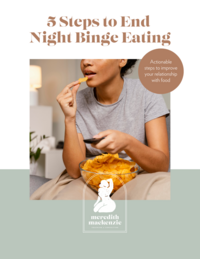
Struggling with the urge to binge eat at night? Download my free 5 Steps to End Night Binge Eating guide for practical ways to understand your eating patterns and find more peace with food.
How Restriction, Stress, and Unmet Needs Can Make Binge Eating Urges Stronger
Have you ever skipped breakfast, eaten a small lunch, and then felt like you couldn’t stop eating by dinner? When you don’t eat enough, your body works harder to get the food it needs. This can lead to stronger hunger, more food noise, and a greater urge to eat. But physical hunger isn’t the only reason binge-eating urges happen.
Several things can make these urges feel more intense:
- Food restriction: Skipping meals, cutting out foods, or following strict diet rules can leave you feeling deprived and more focused on eating.
- Emotional stress: Work pressure, family needs, and difficult feelings can make food seem like a quick way to find comfort.
- Lack of rest: When you’re tired or worn out, it’s harder to manage stress and meet your needs.
- Unmet emotional needs: If you’re always caring for others, you may have little time left for yourself. Food can become one of the few comforting moments in your day.
- Food guilt: Feeling bad after eating can lead to promises to eat less tomorrow, which may keep the binge-restrict cycle going.
These patterns often build on each other. You might restrict food during the day, feel stressed by evening, and then turn to eating for both hunger and comfort. That’s why another set of food rules may not be the answer.
If you often feel stuck between eating less and losing control around food, read Understanding the Binge-Restrict Cycle to learn why this pattern can be so hard to break.
Recognizing Physical Hunger and Emotional Urges to Eat
To understand how to stop the urge to binge eat, notice what’s happening before you reach for food. Sometimes the urge comes from physical hunger. Other times, it may be tied to emotions. Often, both happen at once.
Here’s how they might show up:
- Physical hunger: You may notice a growling stomach, low energy, trouble focusing, or feeling irritable. Hunger often builds over time, but it can also feel sudden if you’ve gone too long without eating.
- Emotional urges: You may want food after a stressful meeting, an argument, or a long day. Eating might feel like a way to calm down, take a break, or avoid difficult feelings.
- A mix of both: You might skip lunch because you’re busy, then come home feeling hungry and overwhelmed. In that moment, food may meet both a physical and emotional need.
You don’t have to figure out exactly what kind of hunger you’re feeling before you can eat. Instead, try noticing what your body and mind need. If you’re hungry, eat enough. If you’re upset, you may also need comfort, rest, or support.
Want to better understand what’s behind your urge to binge eat? Watch this video to explore how stress, emotions, and unmet needs can drive binge eating and what your body may be trying to tell you.
What to Do When You Feel an Overwhelming Urge to Binge Eat
When a strong urge to binge eat hits, trying to fight it can sometimes make it feel worse. Instead, try these steps to understand what’s behind the urge and respond with more care.
1. Pause and Check In
Take a moment to notice what happened before the urge. Did you miss a meal, have a stressful day, or feel upset? Understanding the trigger can help you decide what you need.
2. Make Sure You’re Eating Enough
If you’ve skipped meals or eaten too little, your body may need food. Having regular, satisfying meals can help reduce intense hunger and the urge to binge.
3. Notice Your Emotional Needs
Stress, sadness, or exhaustion can make food feel comforting. Consider whether you also need rest, support, or a break. You can care for those needs while still giving yourself permission to eat.
4. Let Go of Self-Judgment
If you do binge eat, avoid blaming yourself. Instead, reflect on what led to the urge and what might help next time. Recovery is about learning, not being perfect.
Why Fighting or Ignoring Binge Eating Urges Can Keep You Stuck
When you’re afraid of binge eating, you might try to fight every urge by avoiding certain foods, drinking water, or keeping yourself busy. These tricks may help in the moment, but they don’t always address the hunger or emotions behind the urge.
Trying to resist every craving can also create more stress around food. For example, you might avoid cookies all day, only to find yourself thinking about them even more. When you finally eat one, guilt can take over and make it harder to notice when you’re satisfied.
Instead of fighting the urge, try understanding what’s driving it. Giving yourself permission to eat and letting go of strict food rules can ease the pressure and help you build more trust with food.
Building a More Compassionate Response to Binge Eating Urges
Learning how to stop the urge to binge eat starts with changing how you respond to yourself when food feels hard. If binge eating has become a way to cope with hunger, stress, or difficult emotions, self-compassion can help you understand those patterns without adding more guilt.
Focus on small changes, like eating enough throughout the day, giving yourself permission to enjoy food, making time for rest, and finding other ways to manage stress. Working with a therapist or coach who understands binge eating can also help.
Over time, these steps can help you feel more confident handling urges and build a more peaceful relationship with food.
Looking for a practical way to handle binge eating urges? Watch this video to learn a simple tool that can help you feel more grounded when food feels out of control.
How to Stop the Urge to Binge Eat and Find Lasting Food Freedom
Stopping the urge to binge eat starts with understanding what drives it. Hunger, stress, restriction, and unmet needs can all play a role. Instead of relying on willpower, you can begin building trust with your body and responding to food urges with more care.
If you’re ready to move away from binge eating, food guilt, and the pressure to control every bite, my intimate group education and coaching program, One Body To Love, can help you build a more peaceful relationship with food and your body. If you’d prefer personal support, you can also explore my 1:1 coaching. Not sure which option fits? Book a free discovery call, and we can talk about what support feels right for you.
For more conversations about binge eating recovery, emotional eating, intuitive eating, and body image, subscribe to my YouTube channel and tune in to my podcast for practical tools and support as you work toward food freedom.